
Your eyes can provide important clues about your overall health. Our comprehensive exams assess your vision, screen for eye diseases, and detect early signs of serious health conditions you may not know you have.
An eye exam isn’t just about updating your glasses. It’s a critical health screening that can detect serious conditions early—often before you notice any symptoms.

Your eyes are directly connected to your circulatory and nervous systems. During an exam, we can see blood vessel changes, inflammation, and other signs that alert us to problems elsewhere in your body. Certain changes in the eyes can provide important clues about underlying health conditions, which is one reason regular comprehensive eye exams are so important.
We perform a series of tests designed to evaluate every aspect of your vision and eye health. Each test serves a specific purpose and takes just minutes.
Measures how clearly you see at various distances using an eye chart.
Determines your exact prescription for glasses or contact lenses.
Detects blind spots or peripheral vision loss that may indicate glaucoma.
Examines the front of your eye under magnification for disease signs.
Evaluates your retina, optic nerve, and blood vessels in detail.
Measures eye pressure to screen for glaucoma risk.
Captures detailed images to track changes and monitor eye health over time.
The right exam schedule depends on your age, health status, and risk factors. Here are general guidelines we recommend:
6 months, 3 years, before school, then every 2 years until age 18. Early detection prevents vision problems from affecting development.
Every 1–2 years for regular health monitoring. More frequent if you wear contacts, have prescriptions, or have risk factors.
Every year. Age increases risk for glaucoma, cataracts, and macular degeneration. Annual exams catch changes early.
If you have diabetes, hypertension, eye disease history, or take medications affecting vision, we recommend annual exams or as advised by your doctor.
Even if your vision feels perfect, regular exams are preventive care. Many serious eye conditions develop silently. An exam every 1–2 years ensures early detection and protection of your sight.
Your eye exam can be an early warning system for serious conditions affecting your whole body.
Retinal blood vessel damage and swelling are early signs of diabetic retinopathy.
Bleeding, swelling, or narrowing of retinal blood vessels indicates hypertension.
Bulging eyes or eyelid changes may signal thyroid imbalance.
Deposits in the cornea or retina can indicate lipid levels.
Dry eyes, inflammation, or specific retinal patterns suggest autoimmune conditions.
Optic nerve inflammation is sometimes the first MS symptom detected.
Eye manifestations can help diagnose or confirm lupus.
In rare cases, eye symptoms can be early warning signs of certain cancers.
We’ll coordinate with your primary care physician to ensure you receive the necessary follow-up care. Your optometrist is an important part of your total healthcare team.
At Foley Vision Center, we invest in modern technology to make your exam more accurate, efficient, and comfortable.
The result: We catch problems earlier, track changes more accurately, and provide more personalized care recommendations.
To get the most out of your visit and help us provide the best care, please prepare in advance:
We'll use your current lenses as a baseline for comparison and testing.
Many medications affect vision and eye health. We need to know what you're taking.
Mention vision changes, eye discomfort, dry eyes, or new floaters since your last visit.
Tell us about diabetes, high blood pressure, thyroid issues, or family eye disease history.
Whether you work on screens, play sports, or have specific vision needs helps guide recommendations.
Most comprehensive exams take 45 minutes to an hour. Arrive 10 minutes early.
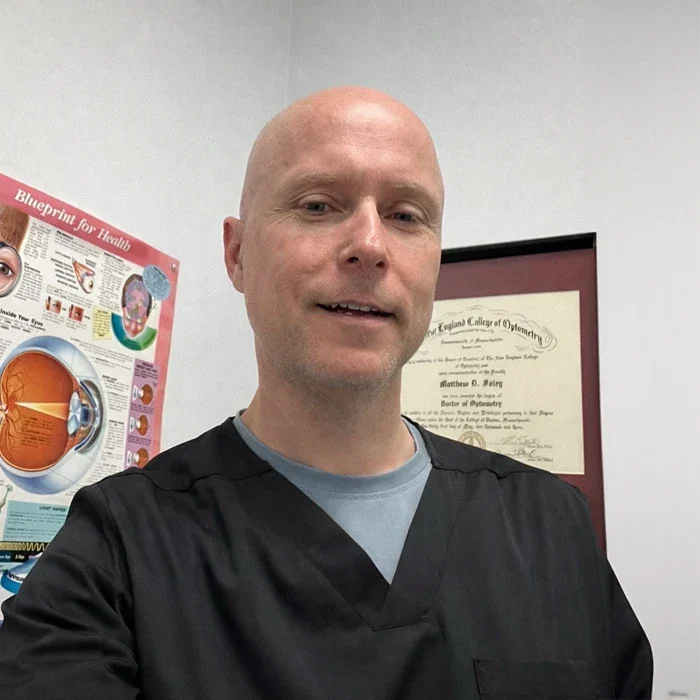
Dr. Matthew Foley, O.D., founder and lead optometrist at Foley Vision Center, has been serving patients in Massachusetts and New Hampshire for over 20 years.
Education & Training: Graduate with honors from the New England College of Optometry in Boston. Special interest in advanced treatments for dry eye disease and comprehensive family eye care.
A Newburyport native, Dr. Foley finds balance outside the clinic enjoying Lake Winnipesaukee, Maudslay State Park, Plum Island, and Hampton Beach. He’s passionate about helping children and rescue animals.
At Foley Vision Center, Dr. Foley combines extensive experience, cutting-edge technology, and compassionate patient care to deliver the best outcomes for every person who walks through our doors.
Our staff will review your benefits and answer any questions. Call us to confirm your coverage.
Request an appointment online or give us a call — we’ll confirm your insurance coverage before your visit.
Closed
9:00am – 6:00pm
9:00am – 6:00pm
9:00am – 6:00pm
9:00am – 6:00pm
Closed