
Nearly 90 million Americans play sports, yet few realize how much optometry shapes their safety and performance. Our Amesbury MA team helps athletes see faster, react sooner and stay protected.
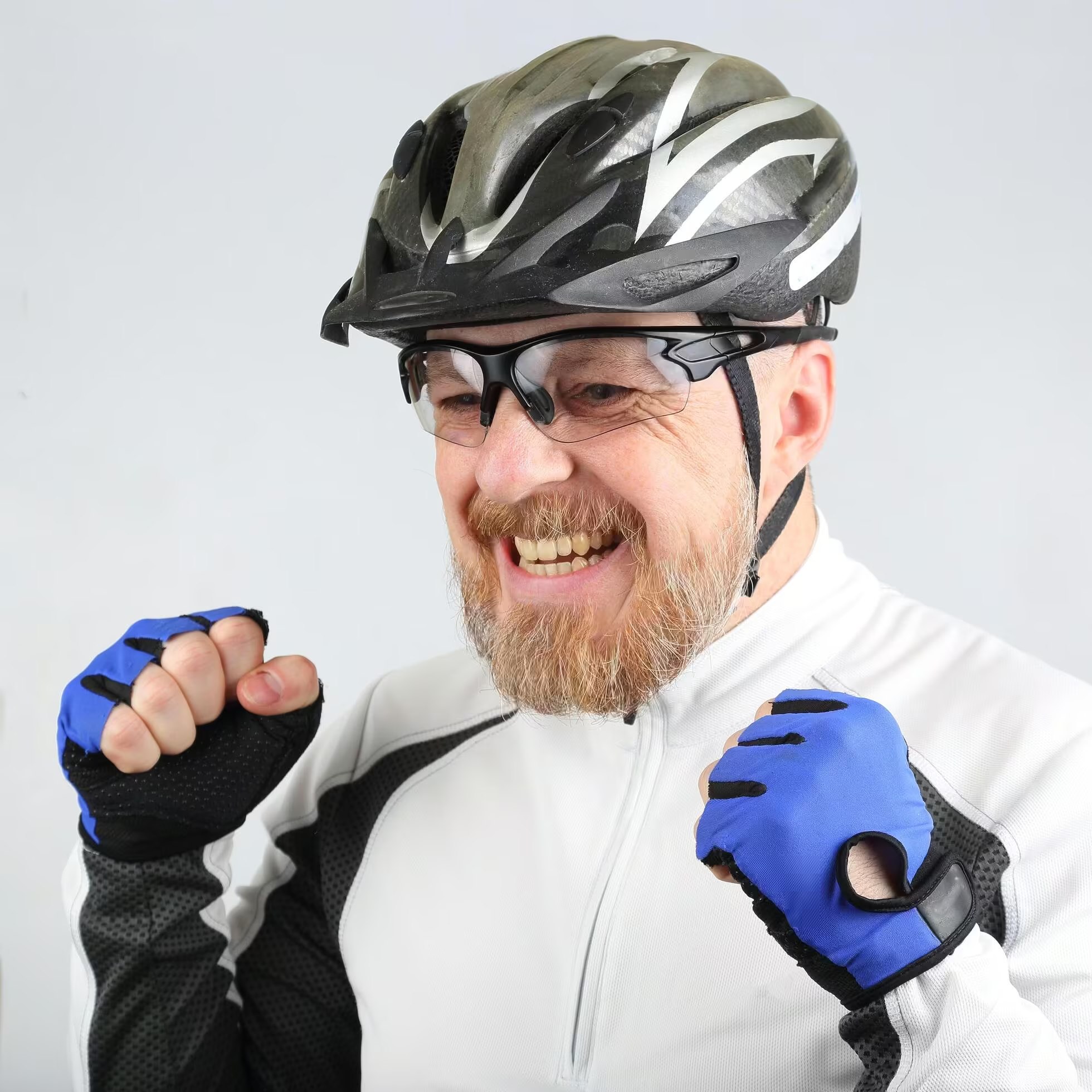
Our experienced optometry team at Foley Vision Center focus on the benefits athletes feel right away — better hand-eye coordination, faster reaction times, and the sharper play that can make a difference for scholarships and competition.
Parents can rest easier too. Proper eye care protects children’s eyes from serious harm, can help identify visual symptoms that may occur following a concussion or sports-related injury.
Comprehensive eye exams and SPV evaluations in Amesbury MA are the starting point for every athlete we see.
By identifying patients who take part in physically demanding activities, our optometrists tailor every examination to the demands of the field, the road or the job.
Assess vision and eye health for athletes, military personnel, and first responders.
Diagnose and manage eye conditions and concussions common in sports injuries.
Identify visual impairments and the areas where performance can improve.
Educate patients on the proper use and fit of protective sports eyewear.
Provide basic sports vision training and refer to specialists when needed.
Tailored care strategies that keep vision sharp season after season.
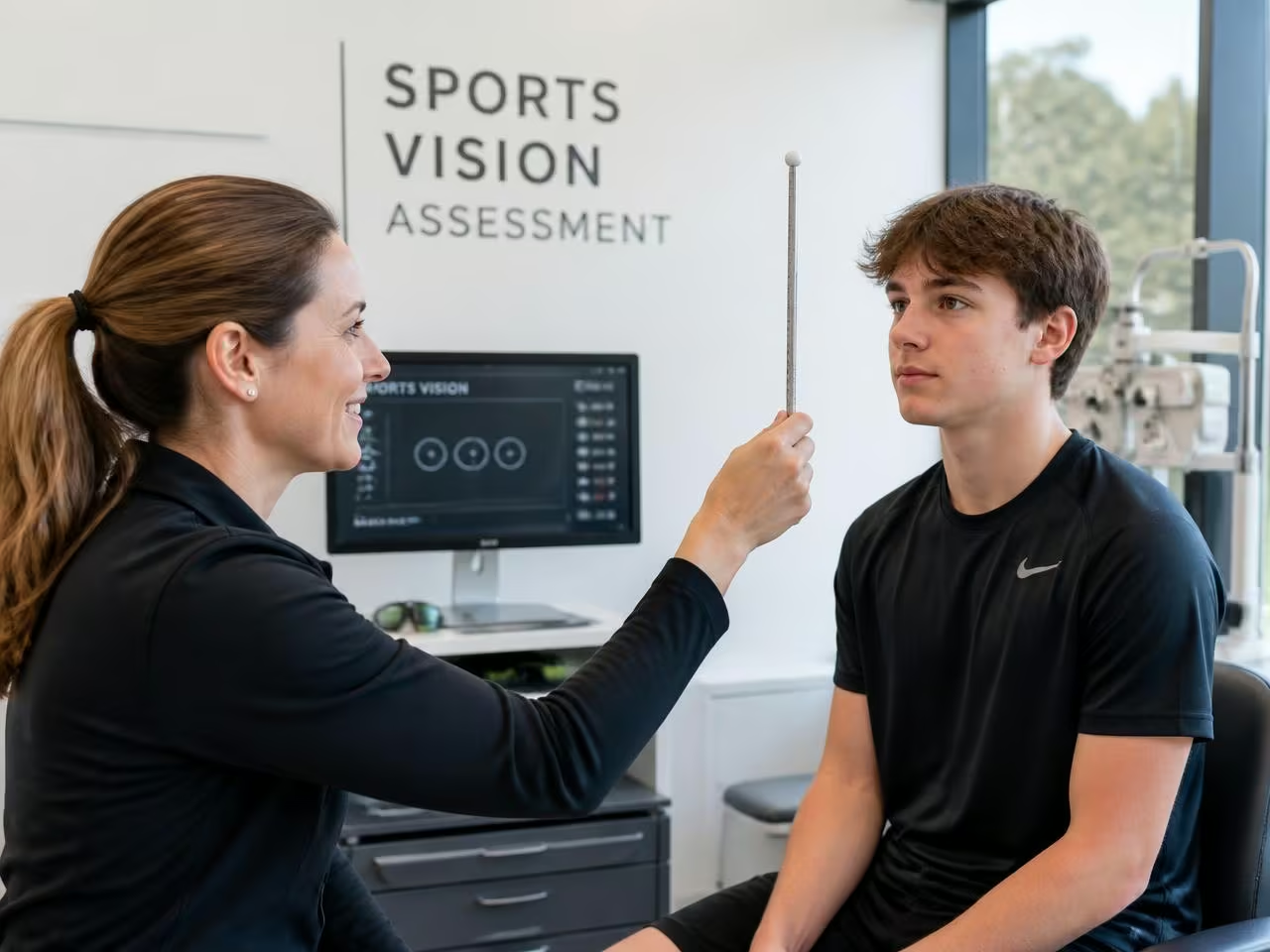
Athletes often pour everything into physical training while vision care goes untouched. Even athletes with no vision problems benefit from improved dynamic visual acuity, faster reaction times and better eye-hand coordination.
As sport becomes more competitive, more professions are recognising the value of vision training — but regular visits to an optometrist remain essential for proper assessment and management of visual performance and eye health.

Early detection and treatment of eye injuries and traumatic brain injuries, including concussions, is essential to preventing further harm. Optometrists are frequently involved in diagnosing and rehabilitating TBIs, supported by resources such as the American Optometric Association’s Brain Injury Electronic Resource Manual (BIERM).
The first BIERM volume covers visual conditions tied to TBIs — binocular vision and eye movement disorders — while the second addresses long-term treatment and management of brain-injured patients.
Regular, comprehensive eye exams and tailored vision care strategies keep athletes performing at their best while protecting their long-term eye health.
A healthy visual system sends accurate images to the brain, which converts them into coordinated movement — like lining up your hands to catch a ball. That eye-brain-body communication depends on these skills.
Shifting focus from one object to another quickly and smoothly.
Judging the speed and distance of objects accurately.
Reacting to visual information efficiently and precisely.
Following moving objects with precision across the field.
Seeing moving objects clearly at full speed.
Noticing movement at the edge of your visual field.
Even the strongest visual skills fall short if eyesight isn’t clear. That’s where glasses and contact lenses come in, giving athletes the sharp vision they need to compete at their best.
If you wear prescription glasses, a sports-specific pair for training and competition is essential. Sports eyewear enhances performance and provides vital protection.
Sports glasses give you the clearest possible vision — critical for top performance.
They protect against fast-moving balls, stray fingers and other hazards that risk vision loss.
Polarized lenses cut glare off water, snow and roads; photochromic lenses adapt to changing light; impact-resistant lenses add durability.
Contacts can be more versatile than glasses — they don’t slip during activity and can improve peripheral vision. Pair them with protective eyewear or sunglasses to guard against debris, glare and impact.
Popular with athletes because they move less on the eye, offering stability and comfort during activity.
Preferred by some for crisp vision and potential eye health benefits — your doctor can advise which fits your sport.
Amber tints sharpen contrast for tennis, soccer and baseball; gray-green tints cut glare for golf, biking and running.
Consult your eye care specialist to choose the best eyewear for your sport and vision needs.
Request an appointment online or give us a call — we’ll confirm your insurance coverage before your visit.
Closed
9:00am – 6:00pm
9:00am – 6:00pm
9:00am – 6:00pm
9:00am – 6:00pm
Closed