
Astigmatism is one of the most common eye conditions. If you have blurry or distorted vision, we can diagnose it and provide effective treatment options to help you see clearly.
Astigmatism is a refractive error caused by an irregularly shaped cornea or lens. Think of a normal eye’s cornea like a perfectly round basketball. In astigmatism, it’s more oval or football-shaped, causing light to bend unevenly as it enters the eye. This prevents light from focusing precisely on the retina, resulting in blurry or distorted vision at all distances.
Astigmatism is one of the most common eye conditions affecting about 1 in 3 people. It can exist alone or combined with nearsightedness (myopia) or farsightedness (hyperopia). Many people don’t know they have it until they get a comprehensive eye exam.
In most cases, astigmatism is something you’re born with—it’s often genetic and runs in families. However, astigmatism can also develop later in life. Understanding the cause helps us determine the best treatment approach for you.
Most commonly present at birth due to genetics. If parents have astigmatism, children are more likely to develop it.
Corneal scarring from injury or eye surgery can cause astigmatism to develop or worsen over time.
Certain diseases like keratoconus (progressive corneal thinning) can alter corneal shape and cause astigmatism.
Eye procedures like cataract surgery or corneal grafts may result in astigmatism as a side effect.
Reading in dim light, sitting too close to screens, or bad posture do NOT cause astigmatism. These habits may cause eye strain, but they won’t create an irregularly shaped cornea. Astigmatism is determined by your eye’s shape.
In a healthy eye, the cornea and lens are evenly curved, allowing light to focus precisely on the retina. With astigmatism, the uneven curvature causes blurred vision at multiple distances.
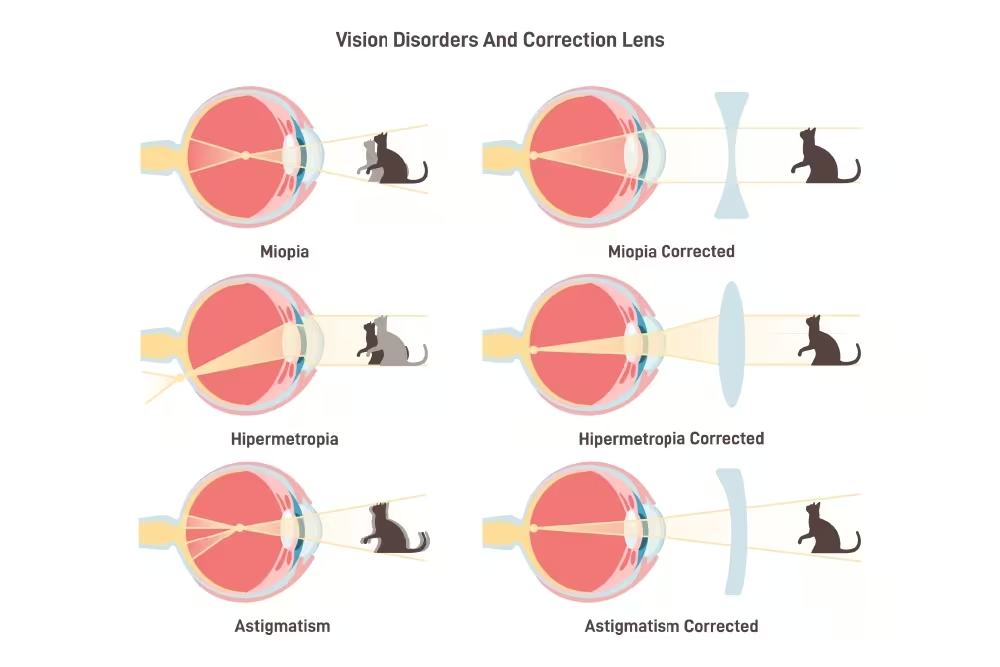
Many people don’t realize they have astigmatism until they get an eye exam. These are the most common symptoms we see in patients with this condition.
Unclear vision at all distances, making tasks difficult.
Frequently squinting to try to focus more clearly.
Uncomfortable feeling in the eyes after focusing tasks.
Frequent headaches, especially after reading or screen time.
Eyes feel fatigued, particularly after activities requiring focus.
Trouble seeing road signs or focusing on oncoming traffic at night.
Glare or halos around lights when driving at night.
Difficulty sustaining focus while reading for extended periods.
Astigmatism in children may cause behavioral signs like poor school performance, avoiding reading, or difficulty concentrating. They may not complain about vision problems because they don’t know what clear vision should feel like.
Diagnosing astigmatism is a straightforward process during a comprehensive eye exam. Our optometrists use several tests to detect and measure the severity of your condition.
You'll read letters on an eye chart from different distances. This shows how clearly you see at various ranges and if vision is blurry.
We use a phoropter (a machine with various lenses) to determine which lens prescription provides the clearest vision for you.
Tear production plays a huge role in contact lens comfort. We assess your tear film to ensure your eyes can support contact lenses. If dryness is a concern, we recommend specific lens types or solutions.
These specialized tests measure the exact curvature and shape of your cornea, revealing astigmatism severity and pattern.
The good news: astigmatism is highly treatable. We have multiple effective options, and we’ll help you find the solution that works best for your lifestyle and vision needs.
The most common and simplest treatment. Specially designed lenses correct the uneven focusing caused by astigmatism.
The easiest solution. Prescription lenses bend light to compensate for corneal irregularity. No maintenance required beyond cleaning.
Contact lenses specifically designed for astigmatism. More convenient than glasses and provide excellent vision correction.
For moderate to high astigmatism, these maintain their shape better than soft lenses, providing sharper vision.
For those seeking a permanent solution, surgical procedures reshape the cornea to correct astigmatism.
Uses a laser to reshape the cornea and correct astigmatism. Most popular option with quick recovery and excellent results for suitable candidates.
Similar to LASIK but doesn't require creating a corneal flap. Good for people with thin corneas or active lifestyles.
If you're having cataract surgery, specialized toric IOLs can correct astigmatism at the same time.
The best treatment depends on your astigmatism severity, lifestyle, age, eye health, and personal preference. During your exam, Dr. Foley will discuss all options and recommend the best approach for your situation.
Untreated astigmatism can significantly impact your quality of life and may cause long-term complications, especially in children.
In children, untreated astigmatism can cause poor school performance and learning difficulties.
Blurred vision increases accident risk while driving, especially at night, and during sports activities.
Severe untreated astigmatism in children can lead to lazy eye (amblyopia) and permanent vision loss.
Prolonged squinting and eye strain can lead to chronic headaches and visual discomfort.
Astigmatism can worsen over time. Regular exams ensure early detection of changes.
Early treatment typically results in better outcomes and faster adaptation to correction.

Dr. Matthew Foley, O.D., founder and lead optometrist at Foley Vision Center, brings over 20 years of experience diagnosing and treating refractive errors like astigmatism. A graduate of the New England College of Optometry in Boston, he stays current with the latest diagnostic technologies and treatment options.
Comprehensive approach: Dr. Foley evaluates each patient’s complete vision profile, not just the astigmatism. He considers your lifestyle, visual needs, and personal preferences when recommending treatment.
Patient education: He believes informed patients make better decisions. Dr. Foley takes time to explain astigmatism clearly and discuss all available options.
Proven results: His patients consistently report improved vision and quality of life after receiving proper astigmatism treatment.

Request an appointment online or give us a call — we’ll confirm your insurance coverage before your visit.
Closed
9:00am – 6:00pm
9:00am – 6:00pm
9:00am – 6:00pm
9:00am – 6:00pm
Closed