
Cataracts make the world look foggy and dim, robbing you of precious moments with family and friends. We offer advanced surgical solutions to restore your clear vision and help you reclaim your quality of life.
A cataract is a clouding of the eye’s natural lens. In a healthy eye, the lens is clear and allows light to pass through. Over time, proteins in the lens clump together, creating opaque areas that block light and scatter it in different directions.
This cloudiness gradually makes vision blurry, hazy, and less colorful—like looking through a foggy window that only gets foggier with time. Cataracts can develop in one or both eyes and typically progress slowly, but they can eventually lead to significant vision loss if left untreated.
Cataract surgery is one of the most successful and commonly performed eye procedures, with a high success rate and excellent outcomes. Millions of people have regained clear vision through modern cataract surgery.
Cataracts typically develop gradually as we age. The most common cause is simply the natural aging of the eye lens. However, several other factors can contribute to or accelerate cataract formation.
Proteins in the lens naturally break down and clump together over time, particularly after age 60.
High blood sugar levels can accelerate protein clumping in the lens, causing earlier cataract development.
Cigarette smoke exposes the lens to oxidative stress, increasing the risk of cataracts.
Prolonged sun exposure without UV protection can damage lens proteins and accelerate cataracts.
Certain medications, particularly corticosteroids, can increase the risk of cataract development.
Previous eye trauma or surgery can lead to cataract formation years later.
Cataracts develop gradually, so symptoms may appear slowly. Early detection through regular eye exams is crucial for protecting your vision.
Gradual blurring at all distances, like looking through a foggy or frosted window.
Bright lights, sunlight, and headlights become uncomfortable and cause glare.
Rings or halos appear around light sources, especially at night or when driving.
Your eyeglass or contact lens prescription needs updating more often than usual.
Colors appear dull, yellowed, or less vibrant than they used to.
Monocular double vision (in one eye only) can be an early sign of cataracts.
Night driving becomes hazardous due to reduced visibility and glare from headlights.
Overall haziness or dimming of vision, even in bright light conditions.
Accurate diagnosis involves a series of specialized tests that assess your vision, eye health, and the severity of any cataracts present.
You read letters on a chart from different distances to measure how clearly you see.
We use a microscope with a focused light beam to examine the lens in detail.
We determine your precise eyeglass prescription to see if updated lenses could help.
After dilating your pupils, we examine the back of your eye to check overall eye health.
We measure your eye pressure to check for glaucoma, which can coexist with cataracts.
This measures how well you see objects against similar-colored backgrounds.
We assess how cataracts affect your ability to see in bright or glaring light.
Advanced technology measures your eye's exact dimensions for surgical planning.
Treatment depends on how much cataracts affect your vision and quality of life. We’ll recommend the right approach for your situation.
When cataracts are mild and not significantly affecting your daily activities, we focus on managing symptoms and monitoring progression.
Use brighter lights at home and work to improve visibility with existing vision.
Wear UV-protective sunglasses to reduce glare and protect against further damage.
A new eyeglass or contact lens prescription may temporarily improve vision clarity.
Use magnifying lenses for reading and close-up tasks to maintain productivity.
When cataracts significantly impact your vision and quality of life, surgery is the most effective solution.
Ultrasound waves break up the cloudy lens through a small incision for easy removal.
An artificial lens is implanted to replace your natural lens and restore clear vision.
Femtosecond laser technology makes precise incisions and softens the lens for safer removal.
Choose from monofocal, multifocal, or toric lenses to correct additional vision problems.
Monofocal: Corrects distance vision; may still need reading glasses. Multifocal: Provides clear vision at multiple distances, reducing glasses dependence. Toric: Corrects astigmatism in addition to focusing power. Dr. Foley will help you choose the best option for your lifestyle.
Most patients experience rapid improvement in vision after surgery. Here’s what the recovery process typically involves.
Many patients notice improved vision within days, though it may take a few weeks to fully stabilize.
You'll use prescribed eye drops for several weeks to prevent infection and reduce inflammation.
Wear protective glasses during the day and a protective shield while sleeping to prevent accidental rubbing.
Avoid strenuous activities, heavy lifting, and swimming for 1-2 weeks to allow proper healing.
Regular check-ups ensure proper healing and allow us to monitor your eye health closely.
Your final vision prescription stabilizes after about 4-6 weeks, when you may get updated glasses.
Over 95% of cataract surgeries result in improved vision. Most patients achieve 20/40 vision or better, and many achieve 20/20 or better with corrective lenses.
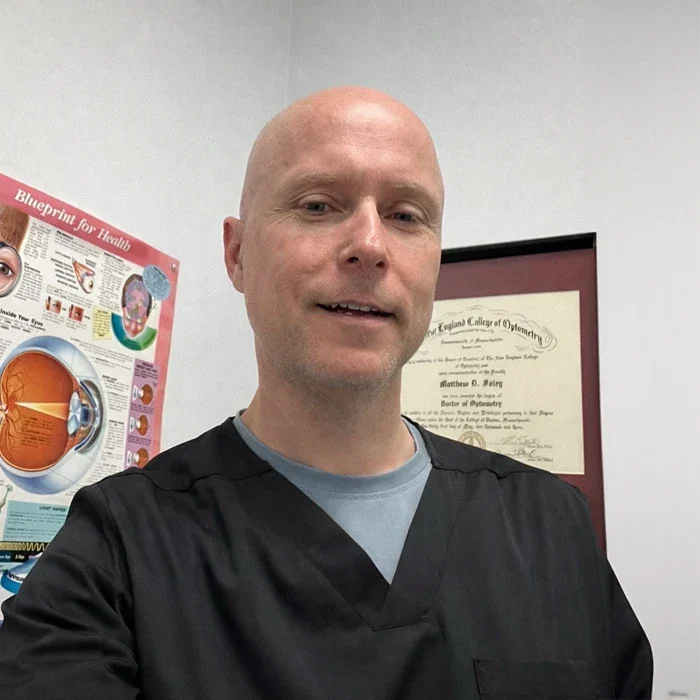
Dr. Matthew Foley, O.D., founder and lead optometrist at Foley Vision Center, has over 20 years of experience diagnosing and co-managing cataracts. A graduate of the New England College of Optometry in Boston, he stays current with the latest surgical advances and IOL options.
Early detection expertise: Dr. Foley specializes in identifying cataracts early, before they significantly impact your vision, allowing for optimal timing of treatment.
Patient education: He believes informed patients make the best decisions. Dr. Foley takes time to explain your options and answer all your questions about treatment.
Surgical coordination: Working with trusted ophthalmologists, Dr. Foley ensures you receive excellent pre-operative and post-operative care throughout your cataract journey.

The decision to have cataract surgery is personal and should be based on how much cataracts affect your daily life and vision needs.
If cataracts make reading, cooking, or hobbies difficult, surgery can restore your independence.
If cataracts compromise night driving or make you uncomfortable on the road, it's time to consider surgery.
If your job requires good vision and cataracts are affecting your performance, surgery can help you succeed.
If vision loss causes you to avoid activities or social events, surgery can restore your quality of life.
Even with mild cataracts, if you want clearer vision for retirement activities or travel, surgery is an option.
Insurance typically covers cataract surgery when it affects vision. Ask us about payment options.
There’s no “perfect” time for cataract surgery, but waiting until cataracts severely impair your vision may limit your options. We recommend surgery when it will improve your quality of life and functional vision.
If you’re experiencing blurry vision, glare, or other signs of cataracts, schedule a comprehensive eye exam at Foley Vision Center. We’ll assess your cataracts and discuss the best treatment options for your needs
Closed
9:00am – 6:00pm
9:00am – 6:00pm
9:00am – 6:00pm
9:00am – 6:00pm
Closed