
Dry eye syndrome is more common than you think—and it’s treatable. We identify the root cause of your dry eyes and provide personalized solutions to restore comfort and protect your vision.
Your tears do more than show emotion—they keep your eyes healthy, comfortable, and functioning properly. Dry eye syndrome occurs when your eyes don’t produce enough tears, or when tears evaporate too quickly. This leaves your eyes exposed to irritation and damage.
Tears have three essential layers: oil, water, and mucus. Problems with any layer can cause dry eye. The result is discomfort, irritation, and potentially serious eye damage if left untreated.
Millions of people experience dry eye syndrome, yet many suffer unnecessarily. We use advanced diagnostics to find the root cause and provide effective solutions tailored to your specific needs.
Dry eye isn’t one condition—it has many different causes. Understanding your specific cause helps us provide targeted treatment for real relief.
Tear production naturally decreases with age, particularly after age 50. Hormonal changes worsen this in women.
Antihistamines, antidepressants, blood pressure medications, and other drugs can reduce tear production.
Blocked oil glands in your eyelids cause tears to evaporate too quickly, leaving eyes dry.
Diabetes, thyroid disorders, autoimmune diseases, and Sjögren's syndrome all increase dry eye risk.
Staring at screens reduces blinking by up to 66%, causing tears to evaporate faster than normal.
Wind, smoke, air conditioning, heating, and low humidity all speed tear evaporation and reduce comfort.
Dry eye feels different to everyone. You might feel dryness, irritation, or even excessive tearing. Here are the most common symptoms we see in our patients.
Persistent burning sensation in one or both eyes throughout the day.
Feeling like sand or grit is in your eye, even though nothing is there.
Ironically, dry eyes often cause watery eyes. Irritation triggers extra tears as a reflex response.
Persistent itching or scratching sensation that doesn't go away with lubricating drops.
Vision that fluctuates throughout the day or becomes clearer after blinking.
Eyes feel uncomfortable in bright light or have difficulty with glare.
Eyes feel tired or strained, especially after reading or screen time.
Contact lenses become uncomfortable, or you need to remove them frequently.
You might notice your symptoms worsen with screen time, wind, air conditioning, or at the end of the day. Identifying your personal triggers helps us develop targeted treatment strategies.
Accurate diagnosis requires more than just looking at your eyes. We use specialized tests to measure tear production, evaluate tear quality, and identify the root cause of your symptoms.
Advanced imaging evaluates the oil glands in your eyelids to detect blockages and dysfunction.
We measure how long tears remain on your eye surface and evaluate tear layer quality.
Measures salt concentration in your tears to detect inflammation and eye surface damage.
Schirmer test measures how much tear your eyes produce, helping us diagnose aqueous deficiency.
Special stains help us visualize damage to the cornea and conjunctiva from dry eye.
High-resolution imaging documents the condition of your eye surface for comparison over time.
There’s no one-size-fits-all treatment for dry eye. We create a personalized plan addressing your specific cause.
Prescription and advanced therapies that target the underlying cause.
Medications that stimulate tear production or reduce inflammation to improve tear stability.
Tiny devices inserted into tear ducts to prevent tears from draining too quickly.
Light-based therapy improves oil gland function and reduces inflammation of the eyelid margins.
Stimulates oil gland function and promotes healing of the eye surface.
Daily practices that improve tear stability and comfort.
Warm compresses unclog oil glands. Gentle lid cleaning removes debris and improves oil flow.
Over-the-counter drops provide temporary lubrication and symptom relief throughout the day.
Thicker formulations provide longer-lasting relief, especially at night.
In some cases, anti-inflammatory medications or antibiotics help reduce eyelid inflammation.
If you have meibomian gland dysfunction, we focus on gland unclogging. If you have aqueous deficiency, we stimulate tear production. If medication is the culprit, we explore alternatives with your doctor. Your treatment plan matches your specific diagnosis.
Simple daily adjustments can significantly reduce dry eye symptoms and prevent future problems.
Take breaks every 20 minutes. Follow the 20-20-20 rule: look at something 20 feet away for 20 seconds.
During screen work, blink frequently to refresh your tear film. Many people blink less when concentrating.
Drink plenty of water throughout the day. Dehydration reduces tear production.
Salmon, walnuts, flaxseeds, and sardines support tear production and quality.
Add moisture to dry indoor air, especially during winter months or with air conditioning.
Wear wraparound sunglasses outdoors to shield your eyes from drying wind.
Avoid smoke, perfumes, and other irritants that trigger evaporation.
Position monitors below eye level to reduce exposed eye surface and evaporation.
Occasional dryness is common, but chronic dry eye should be professionally evaluated. Left untreated, it can lead to infections, corneal damage, or vision changes.
Symptoms lasting more than a few days warrant professional evaluation.
Blurry vision that doesn't improve with blinking or lubricating drops needs evaluation.
Significant eye pain or unusual redness may indicate serious conditions requiring urgent care.
If artificial tears don't provide relief, we can provide prescription solutions tailored to your needs.
If you can't wear contacts due to dryness, we have treatment options that often restore tolerance.
If you experience symptoms regularly, schedule a comprehensive dry eye evaluation today.
Dry eye can progress if untreated, potentially causing corneal scarring or infection. Early professional diagnosis and personalized treatment prevent these serious complications and restore your comfort quickly.
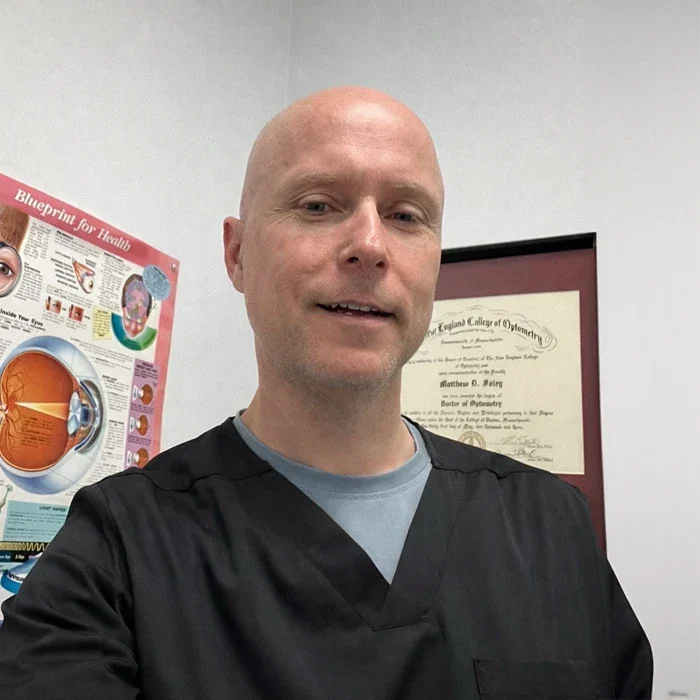
Dr. Matthew Foley, O.D., founder and lead optometrist at Foley Vision Center, has over 20 years of experience treating dry eye syndrome. A graduate of the New England College of Optometry in Boston, he specializes in advanced diagnostics and personalized treatment plans for dry eye disease.
Root cause focus: Dr. Foley doesn’t just treat symptoms—he identifies the underlying cause of your dry eye and develops targeted solutions that provide lasting relief.
Advanced technology: He uses state-of-the-art diagnostic equipment to thoroughly evaluate tear production, tear quality, oil gland function, and eye surface health.
Comprehensive care: From lifestyle adjustments to prescription treatments to light-based therapies, Dr. Foley offers the full spectrum of dry eye solutions to restore your comfort and protect your vision.

Dry eye syndrome is treatable, and relief is possible. Schedule a comprehensive dry eye evaluation at Foley Vision Center today. Let us identify the root cause and provide the personalized solution you deserve.
Closed
9:00am – 6:00pm
9:00am – 6:00pm
9:00am – 6:00pm
9:00am – 6:00pm
Closed