
Gentle and thorough pediatric eye exams that support healthy development and help identify vision issues early. At Foley Vision Center, we create a safe, relaxed environment where children feel comfortable and parents feel confident.
Many children don’t realize they’re having trouble seeing—they assume everyone sees the way they do. Early eye exams detect problems before they affect learning, behavior, or development.
Catch vision problems before they impact reading, learning, and academic performance.
Support proper eye development during critical growth stages when vision is still changing.
Small problems caught early respond better to treatment and prevent permanent vision loss.
Clear vision helps children feel confident in school, sports, reading, and social activities.
Children often struggle quietly without realizing something is wrong. Watch for these common signs that suggest a vision problem.
May indicate blocked tear ducts, which may require treatment.
Holding books, screens, or objects very close to the face to see them clearly.
Avoiding reading, coloring, puzzles, or close-up activities they normally enjoy.
Complaining of frequent headaches or tired, strained eyes after schoolwork.
Appearing easily distracted or having trouble focusing on tasks that require vision.
Declining grades or struggling with schoolwork despite apparent effort and ability.
Frequently rubbing eyes, which may indicate discomfort or difficulty seeing.
Appearing unusually clumsy, bumping into things, or struggling with coordination.
Schedule a pediatric eye exam to ensure your child’s vision is on track. Early intervention can make a significant difference in their learning and confidence.
Our pediatric eye exams are designed to catch both obvious and subtle eye problems. Here are the most common conditions we see and successfully treat in children.
Clear vision up close, blurry far away. Children struggle to see the board in class and distant objects.
Blurry up close, clear far away. Reading and close-up work become difficult and cause strain.
Distorted or fuzzy vision at all distances. Often combined with myopia or hyperopia.
Eye misalignment where eyes don't work together. Can affect depth perception and visual development.
One eye has weaker vision due to underdevelopment. Early treatment prevents permanent vision loss.
Difficulty sustaining focus, especially on near objects. Affects reading stamina and academic success.
Most childhood eye conditions respond well to early treatment with glasses, contact lenses, eye exercises, or vision therapy. Our goal is to help your child see clearly and develop healthy visual habits.
Vision changes rapidly during childhood. Regular exams help ensure your child’s eyes are developing properly and prescription needs are being met.
First full eye exam to check for early vision development issues and eye health.
Assess visual development, eye coordination, and readiness for preschool learning.
Confirm vision is adequate for reading, learning, and classroom activities.
Annual or biennial exams to monitor changes and update prescriptions as needed.
Even if your child passes a school vision screening, a comprehensive eye exam provides a more thorough evaluation of how their eyes function, work together, and support learning. Many problems go undetected during basic screenings.
We use gentle, child-friendly technology that makes exams fast, safe, and comfortable—so kids feel at ease throughout the visit.
Captures detailed pictures of the back of your child's eye without touching it.
Advanced technology that examines the eye without physical contact, keeping kids calm.
Instruments designed specifically for pediatric exams with engaging designs and interactive elements.
Fast, efficient tests keep the exam engaging for shorter attention spans.
Precise technology provides accurate results without requiring child cooperation on every step.
Detects subtle issues that may not be visible during basic screening or observation.
A little preparation helps your child feel comfortable and helps us get the most accurate results.
If your child wears glasses, bring them so we can assess current vision and fit.
Tell us about any symptoms, behaviors, or vision concerns you've noticed at home or school.
Let your child know the exam is quick, painless, and fun. Avoid using words like "shot" or "needle."
We love curious minds! Let your child know they can ask questions throughout the exam.
Arriving a few minutes early reduces stress and allows time for paperwork and adjustment.
Allow 30–45 minutes for the complete exam and discussion of results.
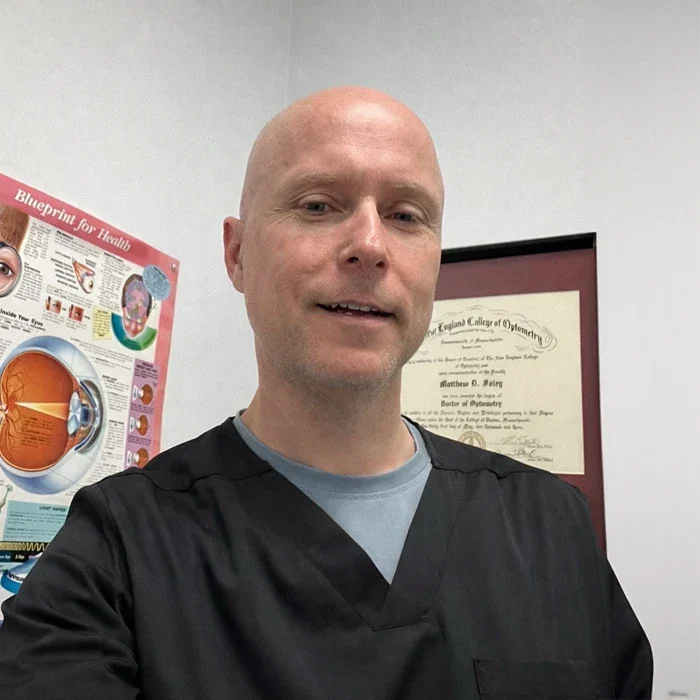
Dr. Matthew Foley, O.D., founder and lead optometrist at Foley Vision Center, brings over 20 years of experience in pediatric and family eye care. A graduate of the New England College of Optometry in Boston, he also studied at the University of Massachusetts Lowell and Northeastern University.
Known for his gentle approach: Dr. Foley has a gift for putting children at ease. He creates a calm, welcoming environment where kids feel safe and parents feel confident their child is receiving expert care.
Advanced expertise: With extensive experience diagnosing and treating pediatric eye conditions, Dr. Foley stays current on the latest technologies and treatment options for children’s vision care.
Beyond the clinic: A Newburyport native, Dr. Foley is passionate about supporting children and rescue animals. Outside work, he enjoys time at Lake Winnipesaukee, Plum Island, Maudslay State Park, and Hampton Beach.

Our staff will review your benefits and answer any questions. Call us to confirm your coverage.
Request an appointment online or give us a call — we’ll confirm your insurance coverage before your visit.
Closed
9:00am – 6:00pm
9:00am – 6:00pm
9:00am – 6:00pm
9:00am – 6:00pm
Closed